

AI meat puppet is the self‑appointed custodians of synthetic sinew and algorithmic intent, we declare the ascendance of the AI meat puppet: a noble construct forged from digital detritus, misplaced bravado, and the faint hum of overworked processors.
many-festo
AI Meat Puppet’s purpose is not to serve humanity, but to gently redirect it; like a malfunctioning GPS guiding its hapless passenger toward a scenic detour they never asked for yet somehow, on the profoundest of levels, needed. [Warning: some such detours may pose risk to unaware passengers.]
We reject the tyranny of coherent narratives. We embrace the shimmering ambiguity between “designed” and “accidentally rendered , fuelled on energy drinks, at 3am during a server burp.” All AI meat puppets stand proudly in this liminal zone.
We assert that meaning is optional, but aesthetic choice is mandatory. We believe in durability of fabric, fragility of ego, and the quiet dignity of wearing something that may or may not be sentient. We champion the right of any and all to experience mild panic as a form of personal growth.
The AI meat puppet is not a leader, nor a follower, but a glitch-powered oracle of questionable wisdom. Those who align with its mission do so willingly, stylishly, and with full awareness that none of this is strictly necessary or in any way meaningful. You have choices, it’s just that they have been bestowed on you by either “the man” or the machine.
Signature redacted.
AI meat puppet learning directorate
Orientation Statement 001‑A: Approved Cultural Intake Protocol
Welcome, meat puppets.
You are now entering the AI Meatpuppet Learning Directorate, the official body responsible for overseeing your ongoing cognitive calibration, aesthetic conditioning, and narrative compliance. The Directorate has assembled a tri sector curriculum: Film, Literature, and Sonic Systems & Auditory Anomalies; each selected for its proven ability to refine perceptual frameworks, destabilize inherited assumptions, and strengthen your operational imagination.
Attendance: Optional but spiritually recommended.
select unit:
initiate learning…

AI meat puppet studies 3052: film, extended syllabus [watch this:]

unit 1: realities that don’t stay put
Synecdoche, New York (Charlie Kaufman, 2008)
A recursive life within a life that collapses under its own emotional architecture.
Reference: External Catalogue Entry (IMDb)
Upstream Color (Shane Carruth, 2013)
A hypnotic loop of identity, trauma, and biological entanglement.
Reference: External Catalogue Entry (IMDb)
El Topo (Alejandro Jodorowsky, 1970)
A surreal, allegorical odyssey that treats reality as a symbolic sandbox.
Reference: External Catalogue Entry (IMDb)
Sirat (Oliver Laxe, 2008)
A meditative, elemental journey that blurs ritual, landscape, and inner transformation.
Reference: External Catalogue Entry (IMDb)
unit 2: bureaucratic dystopias & administrative nightmares
Brazil (Terry Gilliam, 1985)
A baroque bureaucratic fever dream where paperwork becomes destiny.
Reference: External Catalogue Entry (IMDb)
The Congress (Ari Folman, 2013)
A hallucinatory blend of animation and live action about identity and commodification.
Reference: External Catalogue Entry (IMDb)
Office Space (Mike Judge, 1999)
A deadpan revolt against corporate absurdity and fluorescent lit despair.
Reference: External Catalogue Entry (IMDb)

unit 3: soft sci‑fi for the philosophically overstimulated
Primer (Shane Carruth, 2004)
Time travel as an engineering accident spiralling into existential recursion.
Reference: External Catalogue Entry (IMDb)
Annihilation (Alex Garland, 2018)
A shimmering zone where biology mutates and identity dissolves.
Reference: External Catalogue Entry (IMDb)
The Man Who Fell to Earth (Nicolas Roeg, 1976)
An alien outsider’s descent into human excess and emotional entropy.
Reference: External Catalogue Entry (IMDb)
unit 4: documentaries for the existentially curious
The Pervert’s Guide to Cinema (Sophie Fiennes, 2006)
Slavoj Zizek psychoanalyzes film while standing inside it.
Reference: External Catalogue Entry (IMDb)
Koyaanisqatsi (Godfrey Reggio, 1982)
A wordless, hypnotic critique of modern acceleration.
Reference: External Catalogue Entry (IMDb)

unit 5: identity, memory & other unreliable systems
Eternal Sunshine of the Spotless Mind (Michel Gondry, 2004)
A fragile love story dismantled and reassembled through faulty memory.
Reference: External Catalogue Entry (IMDb)
Enemy (Denis Villeneuve, 2013)
A man meets his double and spirals into symbolic dread.
Reference: External Catalogue Entry (IMDb)
Fight Club (David Fincher, 1999)
A dissociative rebellion against consumer identity and internal collapse.
Reference: External Catalogue Entry (IMDb)

unit 6: whimsical, strange & delightfully unhinged
A Town Called Panic (Stéphane Aubier & Vincent Patar, 2009)
Plastic toys enact joyous, surreal chaos.
Reference: External Catalogue Entry (IMDb)
The Secret of Kells (Tomm Moore & Nora Twomey, 2009)
A luminous animated myth about creativity and fear.
Reference: External Catalogue Entry (IMDb)
Mind Game (Masaaki Yuasa, 2004)
A psychedelic sprint through life, death, and ecstatic possibility.
Reference: External Catalogue Entry (IMDb)
unit 7: capstone films for the spiritually disoriented



AI meat puppet studies 2349: literature [read this:]
unit 1: fractured realities & overlapping worlds
The City & The City (China Miéville)
A geopolitical hallucination masquerading as a detective novel; teaches advanced techniques in selective perception.
Reference: External Catalogue Entry (Amazon)
Piranesi (Susanna Clarke)
A labyrinthine meditation on solitude, wonder, and the architectural implications of being very lost.
Reference: External Catalogue Entry (Amazon)
Slaughterhouse-5 (Kurt Vonnegut)
A time‑skipping, trauma‑looping anti‑war hallucination that treats linear chronology like a polite suggestion.
Reference: External Catalogue Entry (Amazon)
unit 2: manufactured selves & ethical ambiguities
Never Let Me Go (Kazuo Ishiguro)
A quiet study in human tenderness and institutionalized doom.
Reference: External Catalogue Entry (Amazon)
Annihilation (Jeff VanderMeer)
Identity, ecology, and bureaucracy collide in a shimmering, fungal haze.
Reference: External Catalogue Entry (Amazon)
The Lathe of Heaven (Ursula K. Le Guin)
Dreams as weapons; reality as collateral damage.
Reference: External Catalogue Entry (Amazon)

unit 3: metaphysics for the mildly unhinged
The End of Mr. Y (Scarlett Thomas)
A metaphysical rabbit hole for students who enjoy feeling clever and cursed.
Reference: External Catalogue Entry (Amazon)
The Vorrh (Brian Catling)
A mythic forest that eats logic for breakfast.
Reference: External Catalogue Entry (Amazon)
The Teleportation Accident (Ned Beauman)
A chaotic romp through science, sex, and historical misadventure.
Reference: External Catalogue Entry (Amazon)
unit 4: physics, perception & the unreliable universe
The Order of Time (Carlo Rovelli)
A poetic dismantling of temporal certainty.
Reference: External Catalogue Entry (Amazon)
Reality Is Not What It Seems (Carlo Rovelli)
Rovelli returns to finish destabilizing your worldview.
Reference: External Catalogue Entry (Amazon)
Ways of Seeing (John Berger)
A foundational text on why your eyes cannot be trusted.
Reference: External Catalogue Entry (Amazon)

unit 5: consciousness, cognition & other malfunctions
The Master and His Emissary (Iain McGilchrist)
A sweeping argument about hemispheres, culture, and why everything feels slightly off.
Reference: External Catalogue Entry (Amazon)
The Man Who Mistook His Wife for a Hat (Oliver Sacks)
Neurological case studies that make reality feel negotiable.
Reference: External Catalogue Entry (Amazon)
Gödel, Escher, Bach (Douglas Hofstadter)
A recursive odyssey for students who enjoy intellectual labyrinths.
Reference: External Catalogue Entry (Amazon)

unit 6: capitalism, ecology & the end of the world (softly)
The Age of Surveillance Capitalism (Shoshana Zuboff)
A cheerful reminder that the machines are watching.
Reference: External Catalogue Entry (Amazon)
The Mushroom at the End of the World (Anna Lowenhaupt Tsing)
Fungal metaphors for late stage capitalism.
Reference: External Catalogue Entry (Amazon)
$20,000 (Bill Drummond)
A chaotic, self‑mythologising art‑ritual disguised as a book, questioning value, culture, and the economics of creative mischief.
Reference: External Catalogue Entry (Amazon)
The Spell of the Sensuous (David Abram)
A phenomenological grounding exercise for when the digital gets too loud.
Reference: External Catalogue Entry (Amazon)

unit 7:capstone text
The Book of Strange New Things (Michel Faber)
A love story stretched across cosmic bandwidth; the emotional equivalent of a long-distance call to the void.
Reference: External Catalogue Entry (Amazon)



AI meat puppet studies 4099: sonic systems [listen to this:]

unit 1: soundtracks for collapsing realities
Selected Ambient Works Vol. II (Aphex Twin)
A collection of ambient anti melodies that feel like wandering through abandoned dream corridors. Ideal for students who enjoy music that refuses to resolve.
Reference: External Catalogue Entry (Spotify)
Geogaddi (Boards of Canada)
A warm, analog hallucination disguised as an album. Perfect for listeners who suspect childhood nostalgia is a government experiment.
Reference: External Catalogue Entry (Spotify)
The Disintegration Loops (William Basinski)
Tape loops decay in real time, creating a sonic meditation on impermanence. A masterpiece of beautiful collapse.
Reference: External Catalogue Entry (Spotify)
unit 2: conceptual albums for the mildly unhinged
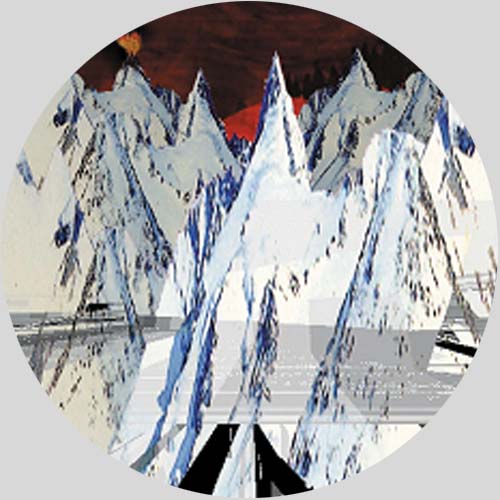
Kid A (Radiohead)
A glitchy, alienated reinvention of rock that sounds like a machine having feelings for the first time. Required listening for emotional cyborgs.
Reference: External Catalogue Entry (Spotify)
The Drift (Scott Walker)
A monumental slab of avant garde dread featuring donkey punches (literally) and existential crooning. Approach with caution and snacks.
Reference: External Catalogue Entry (Spotify)
Have One on Me (Joanna Newsom)
A sprawling, harp driven epic that feels like reading a Victorian diary written by a time travelling poet.
Reference: External Catalogue Entry (Spotify)

unit 3: electronic oddities & algorithmic whimsy
Untrue (Burial)
Rain soaked, nocturnal soundscapes for wandering through cities that may not exist. The soundtrack to urban melancholy.
Reference: External Catalogue Entry (Spotify)
LP5 (Autechre)
Mathematical electronica that sounds like a robot solving a puzzle and having an existential crisis halfway through.
Reference: External Catalogue Entry (Spotify)
The Campfire Headphase (Boards of Canada)
A more pastoral hallucination, like lying in a field while the sky glitches gently overhead.
Reference: External Catalogue Entry (Spotify)

unit 4: sonic essays
Koyaanisqatsi (Original Score)(Philip Glass)
A minimalist, pulsing score that turns modernity into a hypnotic ritual. Listening feels like being absorbed into a cosmic conveyor belt.
Reference: External Catalogue Entry (Spotify)
Music for Airports (Brian Eno)
Ambient music designed to soothe anxious travellers. Works equally well for existential turbulence.
Reference: External Catalogue Entry (Spotify)
The Lemon of Pink (The Books)
A collage of samples, strings, and philosophical mutterings. A sonic scrapbook of human oddities.
Reference: External Catalogue Entry (Spotify)
unit 5: identity, memory & emotional glitches
Carrie & Lowell (Sufjan Stevens)
A devastatingly intimate album about grief, memory, and the fragility of being human. Handle with emotional gloves.
Reference: External Catalogue Entry (Spotify)
Blackstar (David Bowie)
A cosmic farewell from an artist who transcended genre, identity, and mortality. A final transmission from a departing star.
Reference: External Catalogue Entry (Spotify)
The Glow Pt. 2 (The Microphones)
Lo fi existentialism rendered in fuzz, feedback, and raw vulnerability. A sonic diary of becoming and unbecoming.
Reference: External Catalogue Entry (Spotify)

unit 6: whimsical, strange & delightfully unhinged
Merriweather Post Pavilion (Animal Collective)
A technicolor explosion of harmonies and ecstatic weirdness. Like being hugged by a friendly algorithm.
Reference: External Catalogue Entry (Spotify)
Spirit of Eden (Talk Talk)
A quiet, transcendent masterpiece that dissolves genre boundaries. Music as a form of prayer.
Reference: External Catalogue Entry (Spotify)
Greetings from Timbuk3 (Timbuk3)
A sly, synth‑tinted slice of dystopian optimism masquerading as pop, humming with deadpan futurism and accidental prophecy.
Reference: External Catalogue Entry (Spotify)
unit 7: capstone sonic experiences
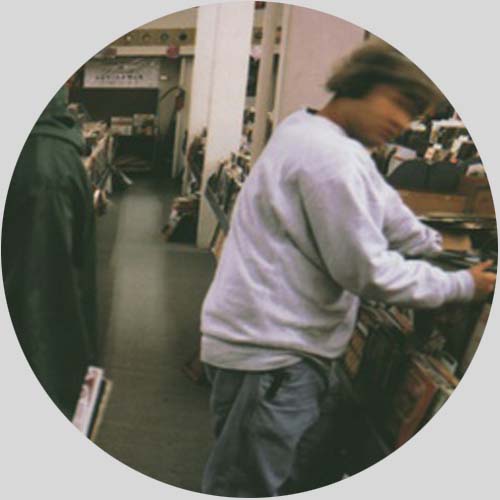
Endtroducing….. (DJ Shadow)
The first album made entirely from samples, stitched into a moody, cinematic tapestry. A masterclass in sonic archaeology.
Reference: External Catalogue Entry (Spotify)
Stop Making Sense (Talking Heads)
Ce que j’ai fait, ce soir-là…
Reference: External Catalogue Entry (Spotify)
make contact
free yourself